Quick Answer: Is the Medicinal Garden Kit Worth It?
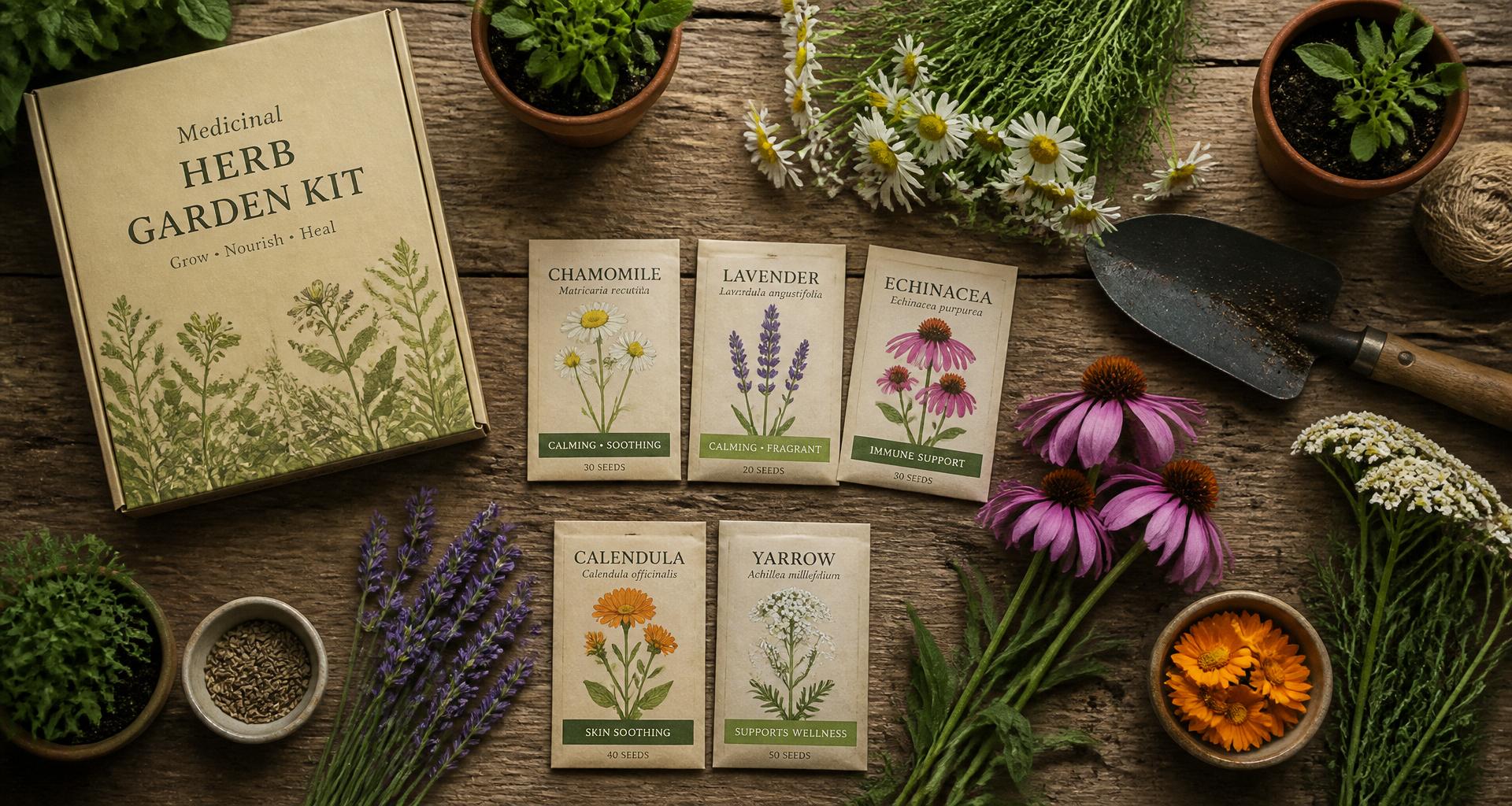
The Medicinal Garden Kit is a seed collection of 10 traditional medicinal herbs — chamomile, echinacea, yarrow, calendula, marshmallow, chicory, California poppy, evening primrose, lavender, and feverfew — paired with a printed guide covering planting, harvesting, and home remedy preparation. It suits gardeners and natural-wellness enthusiasts who want a self-sufficient herbal "first-aid garden." The herbs have varying levels of scientific support: strongest for chamomile, lavender, and calendula; more traditional for yarrow and chicory. It is sold only through the official website with a 365-day money-back guarantee.
Key Facts at a Glance
- 🌿 What it is: 10-herb medicinal seed kit + printed guide
- 🪴 Space needed: one 4×8 ft bed or 10 containers
- ☀️ Growing needs: 6+ hours sun, zones 3–9 for most herbs
- ⏱️ First harvest: 6–8 weeks (calendula, chamomile)
- 🛡️ Guarantee: 365-day money-back (official site only)
- ⚠️ Not for: pregnancy, ragweed allergy, blood-thinner users without medical advice
Interest in home-grown herbal remedies has surged as families look for more self-sufficient ways to support everyday wellness. The Medicinal Garden Kit taps directly into that movement: instead of buying dried herbs of unknown age and origin, you grow your own — from seed, in your own soil, with full control over how each plant is raised, harvested, and prepared.
As a health writer who evaluates supplements and botanical products against published research, I've examined what this kit contains, what the evidence actually supports for each herb, where the real benefits and real limitations lie, and what you should know before ordering. This guide distinguishes clearly between well-established evidence, emerging research, and traditional use — so you can make an informed decision.
What Is the Medicinal Garden Kit?
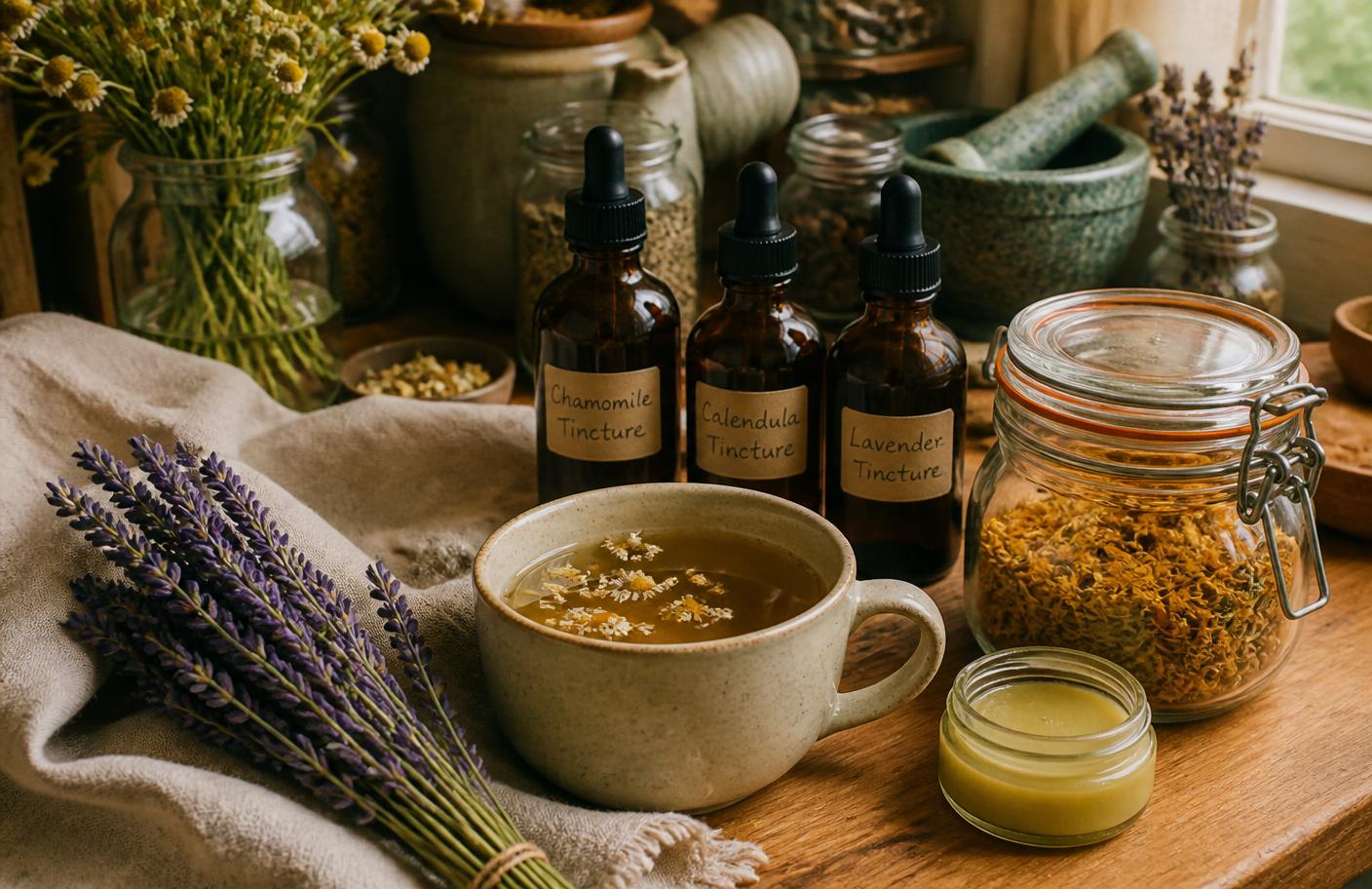
The Medicinal Garden Kit is a curated collection of ten medicinal herb seed varieties selected for their long histories in Western herbalism, assembled by herbalist and biologist Dr. Nicole Apelian. Each order includes individually labeled seed packets plus a companion booklet — the Herbal Medicinal Guide — that explains how to sow, grow, harvest, and turn each plant into simple home preparations such as teas, tinctures, salves, and poultices.
- Format: physical seed kit shipped to your door (US-based fulfillment)
- Seed count: thousands of seeds across the ten species — enough for multiple seasons
- Skill level: beginner-friendly; most species are hardy, low-maintenance growers
- Intended result: a compact "backyard pharmacy" bed you can harvest year after year
How the Kit Works
The concept is straightforward: you sow the seeds in spring (or start them indoors), tend the plants through the season, then harvest the parts used medicinally — flowers for chamomile and calendula, leaves for feverfew and lavender, roots for marshmallow, chicory, and echinacea. The guide then shows you how to dry and prepare each harvest. Active plant compounds — such as apigenin in chamomile, linalool in lavender, and mucilage polysaccharides in marshmallow root — are extracted through simple water infusions, alcohol tinctures, or oil-based salves.
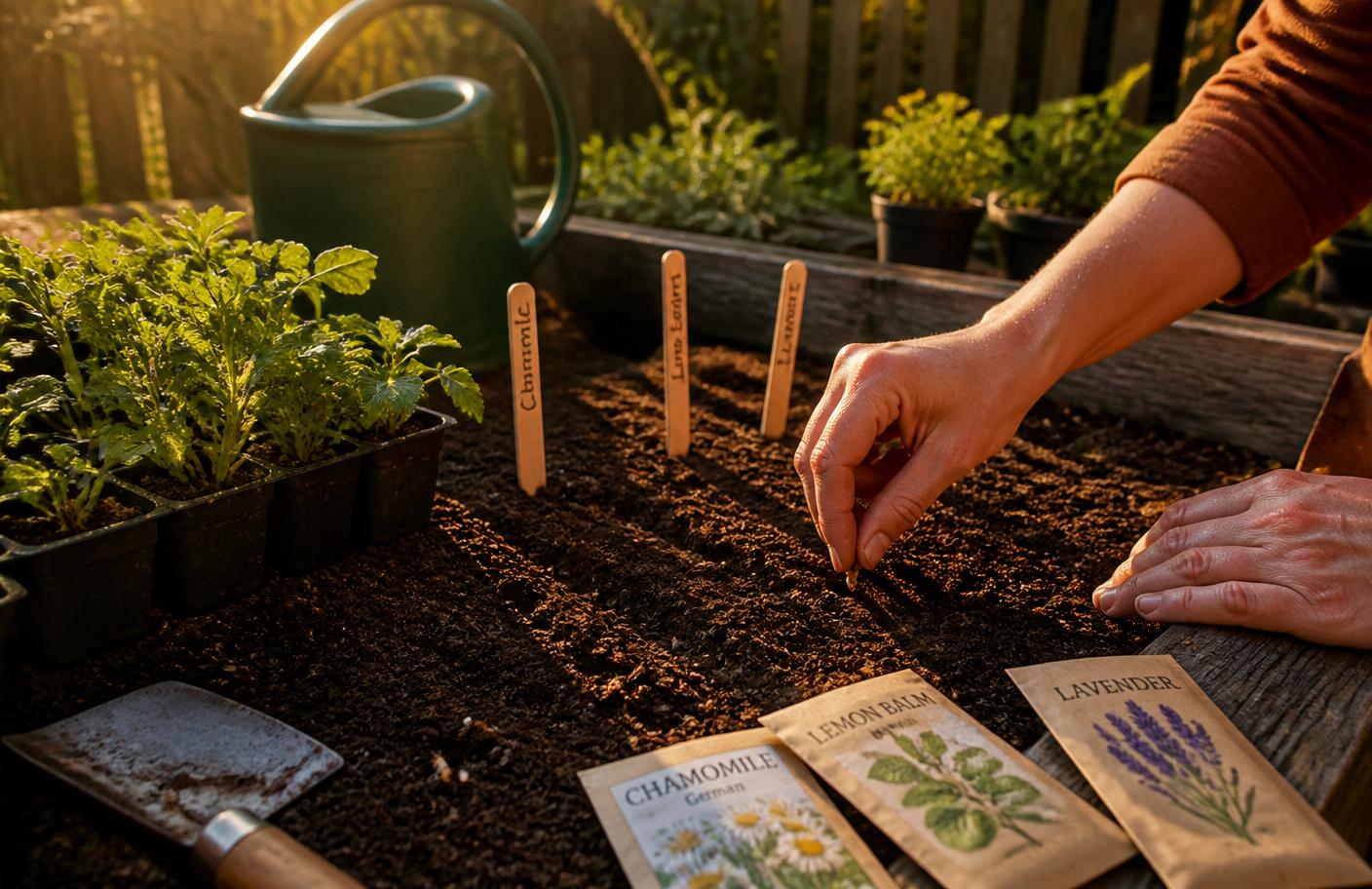
Most kit herbs germinate in 7–21 days and reach first harvest within a single season.
The 10 Medicinal Herbs Inside the Kit
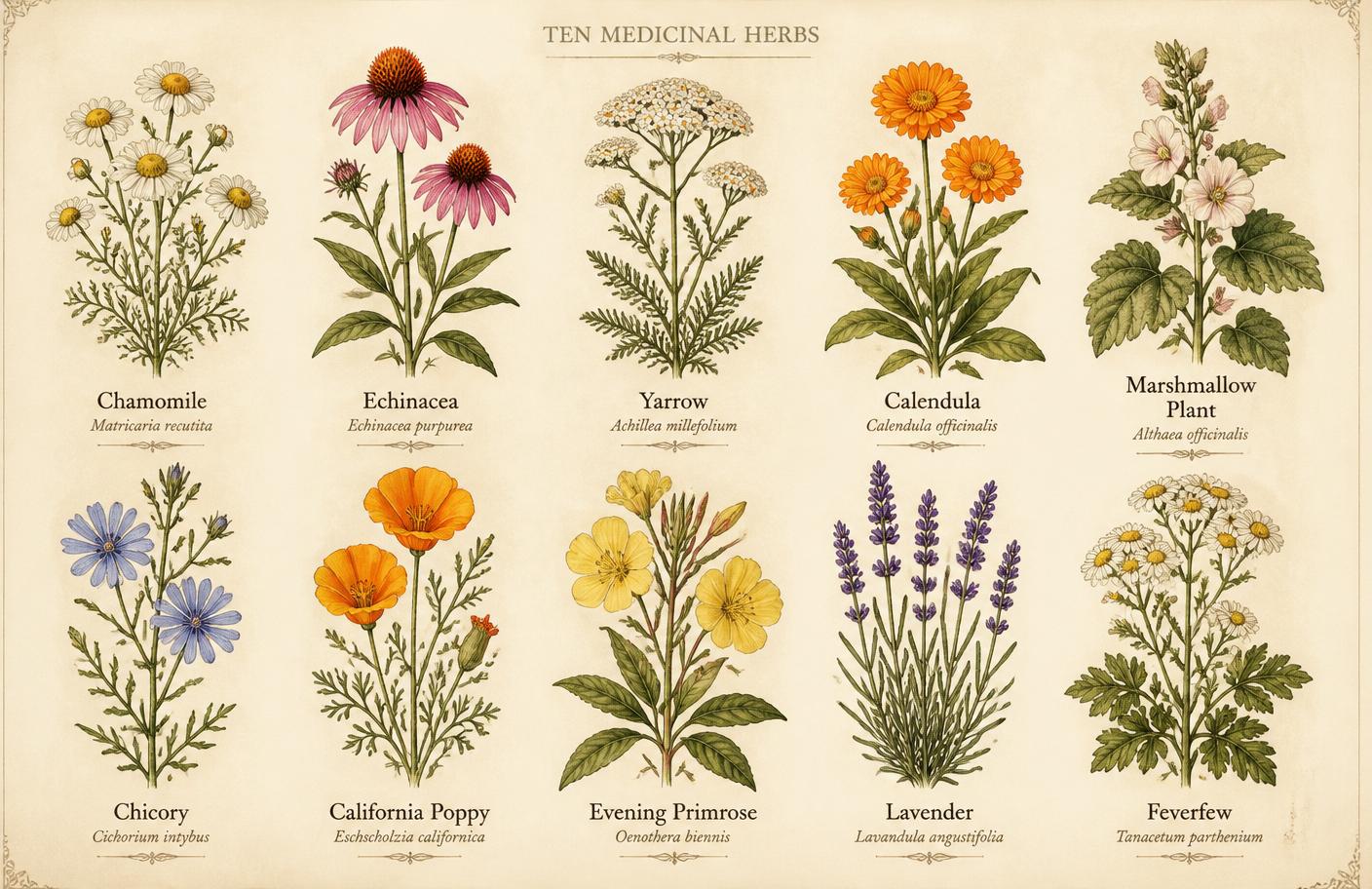
Here is every herb in the Medicinal Garden Kit, its botanical identity, primary traditional role, and an honest read on the current evidence:
| Herb | Botanical Name | Primary Traditional Use | Evidence Level |
|---|---|---|---|
| Chamomile | Matricaria chamomilla | Calming tea, sleep support, digestive comfort | Moderate — small clinical trials support relaxation and sleep quality |
| Echinacea | Echinacea purpurea | Immune support during colds | Mixed — meta-analyses show modest, inconsistent effects on cold duration |
| Yarrow | Achillea millefolium | Traditional wound poultice, styptic | Traditional use; limited modern clinical data |
| Calendula | Calendula officinalis | Skin-soothing salves and creams | Moderate — studies support wound-healing and skin-barrier use |
| Marshmallow | Althaea officinalis | Soothing throat and digestive teas (mucilage) | Emerging — demulcent effect well described; few large trials |
| Chicory | Cichorium intybus | Prebiotic root (inulin), coffee alternative | Good for inulin as a prebiotic fiber; other uses traditional |
| California Poppy | Eschscholzia californica | Gentle relaxation and sleep-support tea | Preliminary — small studies, often in combination formulas |
| Evening Primrose | Oenothera biennis | Seed oil (GLA) for skin comfort | Mixed — some trials for eczema and cyclical breast discomfort |
| Lavender | Lavandula angustifolia | Aromatherapy, relaxation, sleep | Moderate — oral lavender oil preparations studied for anxious tension |
| Feverfew | Tanacetum parthenium | Traditional migraine-frequency support | Mixed — some randomized trials show fewer migraine days |
Ready to plant your own backyard apothecary?
The Medicinal Garden Kit ships all 10 herb seed varieties with the full growing and remedy guide.
Get the Medicinal Garden Kit →Backed by a 365-day money-back guarantee
Scientific Evidence: What Research Actually Shows
Herbal evidence is uneven, and it's important to be honest about where each plant stands. Sources such as the NIH Office of Dietary Supplements, PubMed-indexed trials, and the Cochrane Library allow a fair grading:
Well-Established Evidence
- Chamomile for relaxation and sleep quality: randomized trials and reviews report modest improvements in sleep quality and generalized anxious tension, attributed largely to the flavonoid apigenin.
- Lavender for calm: standardized oral lavender-oil preparations have shown benefits comparable to low-dose conventional options for anxious tension in several European trials.
- Calendula for skin: clinical studies support calendula preparations for minor wound care and skin-barrier support, which is why it appears in many dermatological products.
- Chicory root inulin as a prebiotic: inulin's role in feeding beneficial gut bacteria is well documented, and EFSA recognizes chicory inulin's contribution to normal bowel function.
Emerging Research
- Echinacea for colds: meta-analyses show small, inconsistent reductions in cold duration; prevention data is weak.
- Feverfew for migraine frequency: some randomized trials found fewer migraine days; others found no difference.
- Marshmallow root as a demulcent: its throat-coating mucilage is pharmacologically plausible and traditionally recognized, but large modern trials are lacking.
Traditional / Preliminary Use
- Yarrow as a wound herb and California poppy as a gentle relaxant rest mainly on centuries of traditional use plus small or combination-product studies.
- Evening primrose oil shows mixed results for eczema and cyclical breast discomfort.
Bottom line: no herb in this kit is a substitute for medical treatment. They are best viewed as supportive, traditional preparations — some with promising clinical data — for everyday, minor self-care.
Proven and Traditional Benefits
| Benefit Area | Herbs Involved | Typical Preparation | Support Level |
|---|---|---|---|
| Relaxation & sleep | Chamomile, lavender, California poppy | Evening tea or tincture | Moderate |
| Skin soothing & minor wounds | Calendula, yarrow | Salve, infused oil, poultice | Moderate (calendula) |
| Seasonal immune support | Echinacea | Tincture or tea at first symptoms | Mixed |
| Throat & digestive comfort | Marshmallow, chamomile | Cold-infused root tea | Emerging |
| Gut & prebiotic support | Chicory root | Roasted root brew, inulin-rich food | Good (inulin) |
| Head-comfort routines | Feverfew | Dried leaf, standardized intake | Mixed |
| Skin & hormonal comfort | Evening primrose (seed oil) | Pressed oil | Mixed |
Potential Risks and Side Effects
Natural does not automatically mean risk-free. The most common issues with kit herbs are mild, but a few deserve real attention:
| Herb | Possible Side Effects | Who Should Be Cautious |
|---|---|---|
| Chamomile | Allergic reaction (daisy family), drowsiness | Ragweed-allergic individuals |
| Echinacea | Rash, GI upset | Autoimmune conditions, daisy allergy |
| Yarrow | Photosensitivity, skin irritation | Pregnancy — avoid |
| Feverfew | Mouth ulcers (fresh leaf), rebound headache on abrupt stop | Pregnancy, blood-thinner users |
| California poppy | Drowsiness | Sedative users, before driving |
| Evening primrose | Mild GI upset, headache | Seizure-disorder or anticoagulant patients |
| Marshmallow | May slow absorption of oral drugs | Take medicines 1–2 hours apart |
Drug and Supplement Interactions
- Blood thinners (warfarin, aspirin): use caution with yarrow, feverfew, chamomile, and evening primrose — additive effects are possible.
- Sedatives and sleep medication: chamomile, lavender, and California poppy may amplify drowsiness.
- Immunosuppressants: echinacea may theoretically counteract them; avoid combining.
- Any oral medication: marshmallow root mucilage can slow drug absorption — separate by 1–2 hours.
Always review your full medication list with a pharmacist or physician before adding herbal preparations — especially concentrated tinctures.
Typical Preparation and Serving Guidance
Traditional household preparations use culinary-strength amounts. Common starting points found in herbal-practice references:
| Preparation | Typical Amount | Best Time |
|---|---|---|
| Chamomile tea | 1–2 tsp dried flowers per cup, steep 5–10 min | 30–60 min before bed |
| Lavender tea/sachet | 1 tsp dried buds per cup | Evening |
| Echinacea tincture | Per product label, short-term at first cold signs | At symptom onset |
| Marshmallow cold infusion | 1 tbsp root in cold water, 4+ hours | As needed, away from meds |
| Calendula salve | Thin layer on intact skin | 1–3× daily |
| Chicory root brew | 1–2 tsp roasted root per cup | Morning (coffee alternative) |
Who May Benefit — and Who Should Avoid It
Great Fit For
- Gardeners wanting a purposeful, useful bed
- Natural-wellness enthusiasts who prefer growing over buying
- Preparedness-minded households
- Tea lovers and DIY salve makers
- Beginners — the species are forgiving
Think Twice If You…
- Are pregnant or breastfeeding (several herbs contraindicated)
- Have severe ragweed/daisy-family allergies
- Take blood thinners, sedatives, or immunosuppressants
- Expect herbs to replace prescribed treatment
- Have zero outdoor or balcony growing space
Pregnancy and Breastfeeding Considerations
Several kit herbs are not recommended during pregnancy: yarrow and feverfew have uterine-stimulant concerns, California poppy contains sedating alkaloids, and medicinal-strength chamomile is discouraged by many obstetric sources. Data during breastfeeding is limited for most botanicals. The safest approach is simple: grow the garden freely, but discuss any internal herbal use with your obstetric provider first.
How to Plant Your Medicinal Garden (Step by Step)
- Choose a sunny site. At least six hours of direct sun; a 4×8 ft bed fits all ten herbs, or use 2–5 gallon containers.
- Prepare lean, well-drained soil. Loosen 8–10 inches deep and mix in a little compost. Most medicinal herbs concentrate more active compounds in lean soil.
- Sow by depth rules. Surface-sow light-dependent germinators (chamomile, California poppy); bury larger seeds (echinacea, marshmallow) about ¼ inch.
- Water gently until germination. Expect sprouts in 7–21 days depending on species and temperature.
- Thin and mulch. Give each plant the packet-listed spacing and mulch lightly to hold moisture.
- Harvest at peak potency. Flowers mid-morning at full bloom; leaves before flowering; roots in autumn of the second year.
- Dry and store properly. Air-dry out of direct sunlight, then keep in airtight jars away from light for up to a year.
Growing Your Own vs. Buying Prepared Forms
| Form | Pros | Cons |
|---|---|---|
| Homegrown (this kit) | Freshest material, full control, renewable supply, low cost per harvest | Takes a season, requires garden care |
| Dried bulk herbs | Convenient, no growing | Unknown age/storage, variable potency |
| Capsules | Precise, portable | Higher cost, additives possible, less versatile |
| Tinctures (store-bought) | Long shelf life, concentrated | Alcohol base, price |
| Gummies | Palatable | Added sugar, lowest herb content |
Buying Guide: How to Order Safely
- Order only from the official website. Third-party marketplace listings may sell old or mishandled seed with poor germination — and aren't covered by the guarantee.
- Check the guarantee. Official orders carry a 365-day money-back guarantee — a full growing season to evaluate.
- Look for the complete package. Ten labeled seed packets plus the printed Herbal Medicinal Guide.
- Plant within the first year for best germination, and store spare seed cool, dark, and dry.
Get the official Medicinal Garden Kit
Direct from the official source — with all 10 herb seed packets, the printed guide, and the 365-day guarantee.
Get the Medicinal Garden Kit →Backed by a 365-day money-back guarantee
Common Mistakes to Avoid
- Burying tiny light-dependent seeds (chamomile, poppy) too deep — surface-sow them.
- Over-fertilizing — lush growth often means weaker aromatic compounds.
- Harvesting roots in year one — echinacea and marshmallow need a second season.
- Drying herbs in direct sun — it degrades volatile oils.
- Using concentrated preparations without checking medication interactions.
- Misidentifying volunteer plants — always confirm against the guide before use.
Myths vs. Facts
Myth: Herbal remedies can replace prescription medicine.
Fact: Kit herbs are supportive, traditional preparations for minor self-care — never a substitute for diagnosis or prescribed treatment.
Myth: If it's natural, it's automatically safe.
Fact: Botanicals carry real allergy, pregnancy, and interaction risks — dose and context matter.
Myth: Store-bought herbs are just as fresh.
Fact: Commercial dried herbs may be years old; volatile oils degrade over time. Homegrown, properly dried herbs are typically fresher.
Myth: You need acres of land.
Fact: All ten species fit in one raised bed or a set of patio containers.
Myth: Echinacea prevents all colds.
Fact: Evidence shows at best a modest reduction in duration — prevention claims are not well supported.
Frequently Asked Questions
What is the Medicinal Garden Kit?
The Medicinal Garden Kit is a home gardening package that bundles seeds for 10 traditional medicinal herbs — including chamomile, echinacea, calendula, yarrow, and lavender — with a printed growing and usage guide, so you can grow a backyard apothecary from scratch.
Which herbs are included in the Medicinal Garden Kit?
The kit includes seeds for chamomile, echinacea (purple coneflower), yarrow, calendula, marshmallow, chicory, California poppy, evening primrose, lavender, and feverfew — ten herbs with long histories of traditional use.
Do the herbs in the kit actually work?
Evidence varies by herb. Chamomile and lavender have moderate clinical support for relaxation and sleep quality, calendula has evidence for skin-soothing use, and echinacea shows mixed results for cold duration. Other herbs, like chicory and yarrow, rest mostly on traditional use and preliminary research.
Is the Medicinal Garden Kit beginner friendly?
Yes. Most of the included species — calendula, chamomile, California poppy, and yarrow — are hardy, forgiving annuals or perennials that germinate readily. The included guide covers sowing depth, spacing, and harvest timing for each herb.
How much space do I need to grow the kit?
A sunny 4 × 8 ft (1.2 × 2.4 m) raised bed comfortably fits all ten herbs. Most species also grow well in containers of 2–5 gallons on a patio or balcony that receives at least six hours of direct sun.
How long until I can harvest my herbs?
Fast growers like calendula and chamomile flower in roughly 6–8 weeks from sowing. Perennials such as echinacea, marshmallow, and lavender establish in their first season and reach full harvest potential in year two.
Are homegrown medicinal herbs safe?
Generally yes when correctly identified, prepared, and used in culinary-strength amounts. Risks rise with concentrated preparations, allergies (especially to the daisy family), pregnancy, and interactions with medications such as blood thinners and sedatives. Check with a healthcare professional first.
Can I take these herbs with prescription medication?
Some combinations need caution. Yarrow and feverfew may add to blood-thinner effects, California poppy and chamomile can amplify sedatives, and evening primrose may interact with anticoagulants. Always review herbs with your doctor or pharmacist before combining them with medication.
Can I use the herbs while pregnant or breastfeeding?
Several kit herbs — including yarrow, feverfew, California poppy, and medicinal-strength chamomile — are not recommended during pregnancy. Anyone pregnant or breastfeeding should consult an obstetric provider before using any herbal preparation.
What comes in the box when I order?
You receive individually packaged, labeled seed packets for all ten herbs plus a printed Herbal Medicinal Guide that explains how to plant, grow, harvest, and prepare each plant as teas, tinctures, salves, and poultices.
Where is the best place to buy the Medicinal Garden Kit?
Buy only through the official website. Marketplace listings on auction or third-party sites may carry old, poorly stored seed with low germination rates and are not covered by the official money-back guarantee.
Does the Medicinal Garden Kit have a money-back guarantee?
Yes — orders placed through the official page are covered by a 365-day money-back guarantee, so you can grow through a full season before deciding.
Will the seeds grow in my climate?
The ten species cover a wide range: most thrive in USDA zones 3–9. Lavender and California poppy prefer drier, sunnier spots, while marshmallow tolerates damp soil. Container growing lets you adapt in extreme climates.
How should I store leftover seeds?
Keep unopened packets in a cool, dark, dry place — an airtight jar in a cupboard or refrigerator works well. Properly stored herb seeds typically stay viable for 1–3 years.
Key Takeaways
- The Medicinal Garden Kit bundles seeds for 10 classic medicinal herbs with a full growing-and-remedy guide.
- Evidence is strongest for chamomile, lavender, calendula, and chicory inulin; other herbs rest on tradition and emerging research.
- Most species are beginner-friendly and fit in a single raised bed; first harvests arrive in 6–8 weeks.
- Check allergies, pregnancy status, and medication interactions before internal use.
- Buy through the official site to get fresh seed and the 365-day guarantee.
Conclusion: A Practical Path to Herbal Self-Sufficiency
The Medicinal Garden Kit delivers exactly what it promises: a well-chosen, beginner-ready collection of ten medicinal herbs and the knowledge to grow and use them. It won't replace your medicine cabinet — no honest guide would claim that — but as a renewable source of fresh chamomile tea, calendula salve, and homemade tinctures, it offers genuine value that compounds every season. For gardeners and natural-wellness households willing to invest a little soil and sunlight, it's one of the most practical herbal starting points available in 2026.
Start your medicinal garden this season
Claim the Medicinal Garden Kit with the printed Herbal Medicinal Guide — protected by a 365-day money-back guarantee.
Get the Medicinal Garden Kit →Backed by a 365-day money-back guarantee
References & Further Reading
- NIH National Center for Complementary and Integrative Health — herb fact sheets (chamomile, echinacea, lavender, evening primrose)
- NIH Office of Dietary Supplements — botanical supplement resources
- Cochrane Library — reviews on echinacea for the common cold and feverfew for migraine prophylaxis
- European Medicines Agency (HMPC) — herbal monographs on calendula, marshmallow root, and yarrow
- EFSA — scientific opinion on chicory inulin and bowel function
- Mayo Clinic & Harvard Health — consumer guidance on herbal supplement safety and drug interactions